
Curious about Human Design? Just found out that you or someone you know is a Projector? Want to Tu t’intéresses au Design Humain ? Tu viens de découvrir que tu es un type projecteur ? Tu veux comprendre comment les type projecteur fonctionnent naturellement ? Je suis Oria, ta guide en Design Humain, et je suis là pour te déchiffrer tout ça.
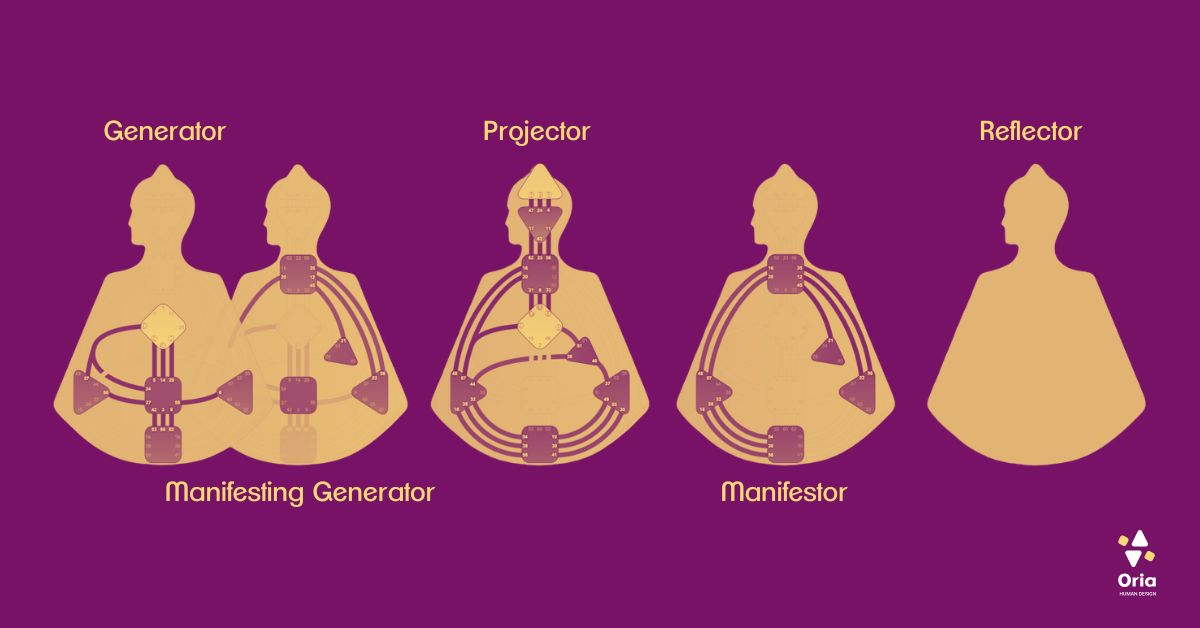
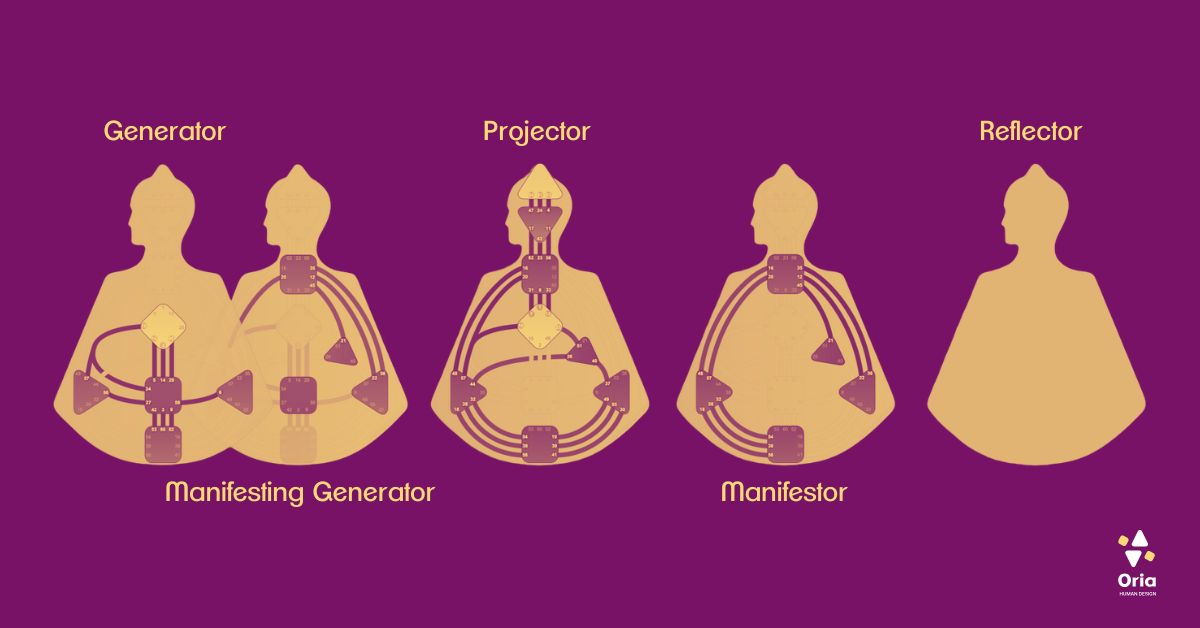
Les 5 types du Design Humain
À l’origine, il existe 4 types en Design Humain, mais nous considérons le Manifesting Generator comme un type à part entière pour une meilleure compréhension.
- Type Manifesteur
- Type Générateur
- Type Manifesting Generator
- Type Projecteur
- Type Réflecteur
Chaque type a sa propre façon naturelle de fonctionner, une aura unique et une stratégie spécifique qui facilite la vie quotidienne. Chaque type a aussi une essence et un concept de « not-self », qui est ce qui se produit quand tu n’es pas alignée avec ta nature profonde, souvent parce que tu essaies de rentrer dans les normes sociales.
Le Design Humain t’aide à te comprendre comme tu l’es vraiment au cœur de toi-même. Si tu ne l’as pas encore fait, je te recommande de calculer ton thème corporel en Design Humain en cliquant ici (Android) ou ici (Apple). Ce système peut t’aider à t’aligner avec toi-même et à vivre une vie plus authentique et épanouissante.
Les essentiels du type projecteur en Design Humain
1 – Qu’est-ce que le type projecteur en Design Humain ?
Les type projecteur représentent environ 21 % de la population en Design Humain. Si tu es un type projecteur, voici un rapide aperçu de ce que ça signifie pour toi.
Les type projecteur sont des individus qui peuvent afficher beaucoup d’assurance et des compétences tranchantes quand ils se sentent reconnus. La reconnaissance est clé pour les type projecteur : ils ont besoin de se sentir valorisés, entendus et invités à partager leurs talents. Si je devais résumer le type projecteur en deux mots, ce seraient « reconnaissance » et « intégration ».
Techniquement parlant, les type projecteur ont un centre sacral indéfini et aucun centre moteur (comme la racine, le plexus solaire, le sacral ou le cœur égotique) connecté à la gorge. Cela fait des type projecteur le type le plus divers en Design Humain, avec le nombre de centres moteurs activés variant et impactant significativement comment chaque type projecteur fonctionne.
Les type projecteur ont des talents uniques, mais pour vraiment les exprimer, ils ont besoin de se sentir reconnus en premier. Une fois qu’ils le sont, ils peuvent vraiment briller avec assurance.
2 – Sous les projecteurs : aucun centre connecté à la gorge
Si tu es un type projecteur, tu es différente des trois autres types (Générateur, Manifesting Generator et Manifesteur) parce que, comme les Réflecteurs, tu n’as pas cette impulsion intérieure de « force vitale » qui te pousse à agir. Au lieu de cela, tu as naturellement tendance à observer plutôt qu’à initier.
Cependant, quand tu te sens vue et reconnue, c’est à ce moment-là que tu peux vraiment entrer en action d’une manière qui est à la fois pertinente et efficace.
Sur un plan technique, aucun centre n’est connecté à ta gorge, ce qui signifie que tu n’as pas une envie naturelle de te lancer dans l’action.
Tu as naturellement une attitude facile à vivre et une légèreté quand tu es alignée avec ton vrai toi. Mais si tu n’es pas alignée, tu pourrais te retrouver à donner l’impression d’être un peu je-sais-tout.
Cette force tranquille naturelle que tu as est magnétique et t’aide à te connecter facilement avec les autres, ce qui fait de toi une guide, une leader ou une coach naturelle.
3 – L’aura pénétrante du type projecteur
Les type projecteur ont une aura pénétrante. Ils ont la capacité de « pénétrer » l’énergie d’une autre personne et de la voir à travers, presque comme un scanner naturel. Cela les rend incroyablement utiles comme guides parce qu’ils comprennent souvent les autres mieux que ces personnes ne se comprennent elles-mêmes.
Cette capacité permet aux type projecteur d’être très perspicaces et précis quand il s’agit des gens avec qui ils interagissent. Les centres définis (les zones colorées sur le thème du Design Humain) leur donnent accès à des insights spécifiques sur les autres, qu’ils peuvent utiliser avec grande pertinence.
4 – Comment fonctionne un type projecteur ?
Si tu es un type projecteur, tu remarqueras que tu fonctionnes mieux quand tu te sens invitée et reconnue. Ce n’est pas une question d’attendre de la flatterie ou des compliments, mais plutôt de savoir que ton opinion compte, que les gens cherchent tes insights et que ta personnalité est appréciée.
En pratique, les choses ont tendance à se passer beaucoup plus en douceur et à se sentir plus justes quand tu prends en charge des situations ou des projets où tu te sentais reconnu dès le départ. ✨
Ton défi est de faire attention à l’importance d’être invitée. Cela peut se manifester de différentes façons, mais essayer d’initier quelque chose sans être invitée en premier peut avoir un impact négatif sur toi.
Reste vigilante aux signaux, car tu pourrais te sentir triste ou frustrée si tu te sens ignorée, non appréciée ou mal comprise.
Pour les type projecteur en entrepreneuriat, c’est courant d’entendre des choses comme « personne ne me voit » ou « je n’ai pas de visibilité ». C’est pourquoi comprendre ton Design Humain et découvrir ta façon unique de fonctionner est tellement important.
5 – L’énergie du type projecteur
En tant que type projecteur, tu as naturellement besoin de plus de temps pour te recharger que d’autres types avec de plus grandes réserves d’énergie. Il est important d’honorer cette partie de toi qui sait ce dont tu as besoin. Ce temps mort est essentiel pour toi de guider les autres d’une manière juste et efficace.
Tu es naturellement douée pour organiser, équilibrer et faciliter les interactions humaines. Alors, ne te culpabilise pas de prendre le temps dont tu as besoin pour te régénérer. Ce n’est pas de la paresse : c’est nécessaire pour toi et pour les gens que tu aides quand tu écoutes ton corps.
De plus, si tu ne respectes pas ton besoin de te recharger, tu pourrais être plus proclive à certaines dépendances comme le sucre, le sexe, l’alcool ou les drogues. Prendre soin de toi t’aide à éviter ces pièges.
6 – La stratégie du type projecteur : attendre l’invitation
La stratégie du type projecteur tourne autour d’attendre l’invitation. En termes pratiques, cela signifie être clairement invitée par quelqu’un d’autre avant que tu entres en action pour guider, partager tes réflexions ou agir dans des domaines clés de la vie, que ce soit personnel, relationnel ou professionnel.
Alors, comment un type projecteur fonctionne ? C’est assez simple. En premier lieu, tu te concentres sur la cultivation de tes dons et sur ce qui t’apporte de la joie. C’est crucial pour un type projecteur ! C’est à travers ce processus que tu découvres, apprends et maîtrises un sujet dont tu es passionnée.
Ensuite, ton défi est de te rendre visible dans ce domaine de passion. Mais comment fais-tu ça ? En partageant quand les gens s’approchent de toi. En tant que type projecteur, tu peux mettre tes ressources là-bas, et quand quelqu’un montre de l’intérêt et te pose des questions, tu te sens reconnu. C’est ta chance de laisser tes talents briller et de montrer la valeur que tu peux apporter.
C’est là que tu te révèles vraiment : quand quelqu’un te pose une question sur quelque chose dont tu es profondément passionnée et que tu te sens invitée à partager et les guider sur ce sujet.
7 – Alignement et non-soi du type projecteur en Design Humain
Le signe que tu es alignée en tant que type projecteur est le succès, et quand tu n’es pas alignée, c’est l’amertume.
L’alignement du type projecteur : le succès
En tant que type projecteur, tu t’épanouies sur le sentiment de succès. Tu aimes guider les autres, te sentir reconnu et être valorisée pour tes contributions. C’est encore mieux quand tes talents sont pleinement appréciés par ceux qui t’ont demandé de l’aide et quand ton guidance est vraiment entendue et fait une différence.
En termes simples, ton sentiment de succès est directement lié à la façon dont tu te sens reconnue.
Le not-self du type projecteur : l’amertume
L’amertume est le signal fort que tu n’es pas alignée en tant que type projecteur. C’est comme un mélange de tristesse, de colère et de frustration. Quand tu ne suis pas ta stratégie, tu pourrais te sentir rejetée par les autres, triste de ne pas pouvoir guider ou aider, en colère d’être ignorée et frustrée que les gens ne voient pas la valeur que tu apportes.
Cela peut mener à de l’amertume, se sentir non appréciée et frustrée de ne pas être reconnue pour qui tu es et ce que tu fais. Si tu te sens souvent amère, c’est un signe que tu ne vis pas d’une manière qui soutient ton bien-être.
Au lieu d’enterrer ou de nourrir cette amertume, essaie de l’observer. Demande-toi : avant d’agir, te sentais-tu reconnue et invitée à le faire ? L’amertume surgit souvent quand tu ne respectes pas ta façon naturelle de fonctionner.
Design Humain en pratique
Prête à plonger plus loin ? Tu as besoin de réponses sur ton thème corporel ? Tu veux le guide ultime pour maîtriser cette info dans ta vie quotidienne ? Télécharge l’app Oria maintenant (ici pour Apple, ici pour Android) ! Je suis Oria, ta guide incontournable. Obtiens ton thème corporel gratuit, laisse-moi te guider et pose-moi toutes les questions dont tu as besoin. Parce que quand il s’agit du Design Humain, il n’y a pas de meilleure guide que moi.
Oria.